GPT-6 Astra Release: Price and Access
OpenAI, the company behind ChatGPT, announced GPT-6 Astra on September 3, 2026. A model is the AI system working behind a service such as ChatGPT when it produces an answer. Astra succeeds GPT-5.6 Sol at the top of OpenAI's GPT lineup.
An announcement does not mean everyone can use the model at once. Only a limited set of organizations had access on launch day, and the rollout is still moving across accounts over several days. Two people can pay for the same plan while only one sees Astra in the model list.
This post walks through who can use Astra and at what cost, what actually changed, how to read the benchmark numbers, and why the rollout is deliberately slow. The names are the first source of confusion, so that is where we start.
- GPT-6 Astra
OpenAI's latest model at the top of the GPT family. What sets it apart from its predecessor is not better text answers but its ability to operate computer programs and finish deliverable files.
GPT-6 Astra and GPT-6 Pro are the same model
Launch coverage calls the model Astra, while the ChatGPT interface calls it GPT-6 Pro. They refer to the same model. Astra is the model name used in the announcement and benchmark tables, and its API model ID is gpt-6-astra.
GPT-6 Pro is the menu name for choosing Astra in regular ChatGPT chat. That label applies only to the chat interface. ChatGPT also has Work and Codex surfaces, which the next section explains, and both use the Astra name directly.

The two names belong to different layers. OpenAI calls the model itself Astra, while ChatGPT calls the slot that contains it GPT-6 Pro. If you read about Astra in launch coverage, look for GPT-6 Pro in regular ChatGPT chat.
GPT-6 Astra access by plan
Paying for ChatGPT does not automatically include Astra. It is unavailable on the Free plan and on Go, the lowest paid plan. Access also differs among the paid plans.
OpenAI offers three ChatGPT surfaces. There is the familiar chat interface, Work for business tasks, and Codex for code work. Codex runs inside ChatGPT or as a separate terminal program, but both are the same Codex product.
Plus subscribers can use Astra only in Work and Codex, not in regular chat. Because access is rolling out in stages, the date it appears can vary by account.
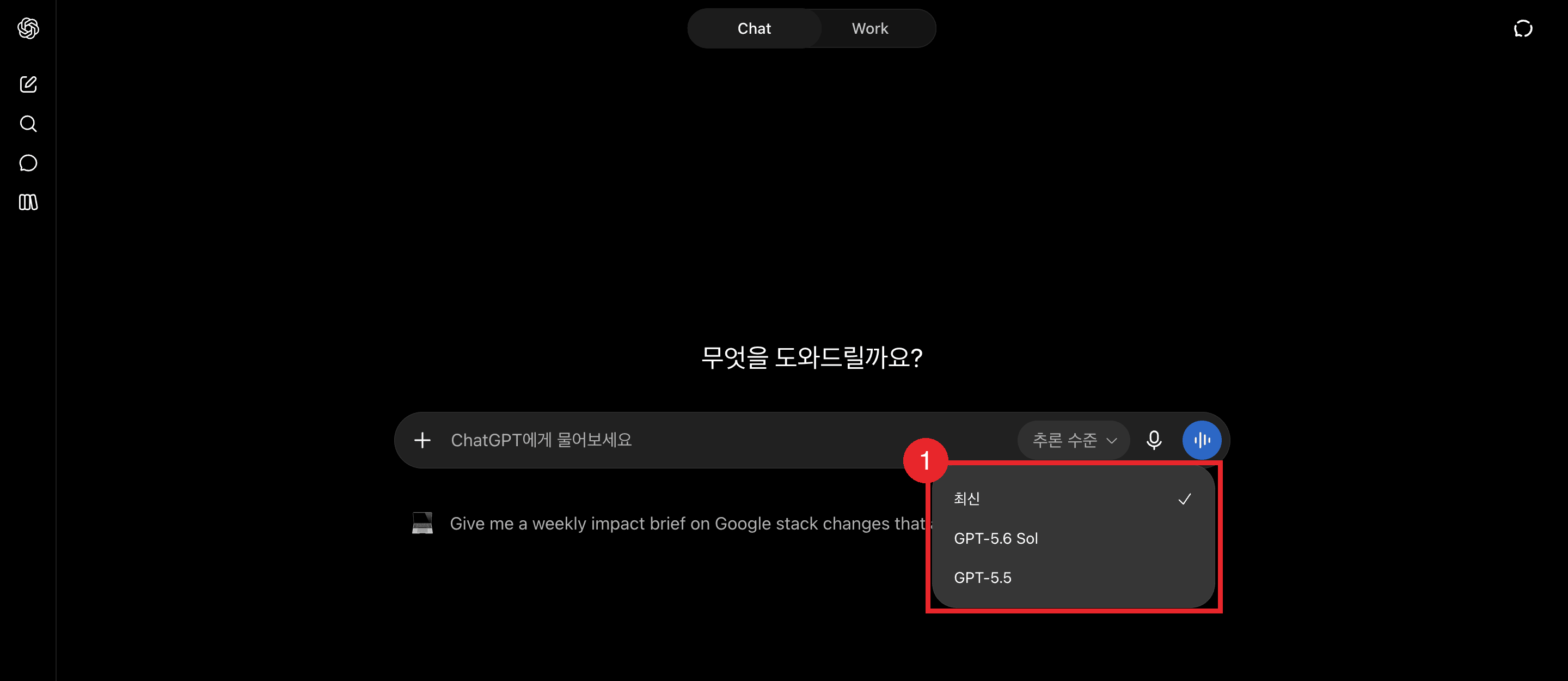
Regular chat access starts with the Pro, Business, and Enterprise plans. On those plans, Astra appears under the GPT-6 Pro menu name described above.
| Plan | Regular chat (GPT-6 Pro) | Work / Codex (Astra) | Key condition |
|---|---|---|---|
| Free / Go | Not available | Not available | Neither Astra nor its predecessor Sol is included. Only lighter models are available |
| Plus | Not available | Available | Rolls out in stages |
| Pro $100 / $200 | Available | Available | Two tiers with different usage limits |
| Business | Available | Available | Allowance depends on the seat tier (Standard / Premium) |
| Enterprise | Available | Available | Depends on the workspace's model access settings |
Business plans assign seats to employees, and those seats come in Standard and Premium tiers. Check which seat you have before relying on Astra access. Standard includes 15 GPT-6 Pro messages per month, while Premium includes 50 per week, more than ten times as much when converted to a monthly figure.
GPT-6 Pro and GPT-5.6 Sol Pro share this allowance. Regular chat allowance is separate from Work and Codex usage.
Even when your plan qualifies, your account may still be waiting its turn. Does a missing GPT-6 Pro menu mean Astra is unavailable everywhere? No, because Chat, Work, and Codex can each receive access at different times. On one Business account I checked, GPT-6 Pro was still absent from the chat model list while Astra had already appeared in Work, as shown above.
OpenAI offered compensation for paid users who qualified but had to wait. Starting September 4, 2026, each day without Astra access earns one reset. A reset returns spent usage to zero and refills the allowance, letting users make up for the wait later.
Terminal Codex needs one more thing: an up-to-date installation. Run codex --version and confirm that it is 0.153.0 or later, because older versions will not show the new model. If it is lower, update with npm install -g @openai/codex. It is also a good idea to install the latest ChatGPT desktop release from the app's update menu.
GPT-6 Astra pricing and the 2.5x API gap
There are two ways to pay for Astra. A subscription charges a flat monthly price for a set allowance. The API charges by the tokens used.
A token is the smallest unit of text a model processes; in English, a token is roughly three-quarters of a word. The API, or Application Programming Interface, is how developers connect a model to another service, so a subscription is the more relevant route for most readers.
Subscribers need to watch the usage limit rather than the token price. Astra consumes that allowance quickly. Early users compared the limit to a popsicle melting on a hot day, while another report said weekly usage rose from 4% to 14% after assigning Astra a task.
That second figure covers total account usage, not Astra alone. Still, both reports point in the same direction: the allowance falls quickly.
For API users, the official model catalog lists Astra at $10 per million input tokens and $50 per million output tokens. GPT-5.6 Sol costs $4 and $20, making Astra exactly 2.5 times as expensive. Both models accept up to 1.05M tokens at once. Claude's top model, Fable 5.1, also costs $10 and $50, so Astra adds another top-tier model at the same price rather than setting a new price level.
With API billing, using fewer tokens for the same work directly lowers the bill. The usual options are switching to a lighter model or lowering reasoning effort. Reasoning is the work a model does before giving an answer.
More reasoning can improve the result, but it also uses more tokens. Simple tasks can often save tokens by lowering it or turning it off.
Astra removes the second option. GPT-5.6 models including Sol can turn reasoning off, but Astra's minimum reasoning level is low and cannot be disabled. Even a short question must pass through reasoning, so the real cost difference can grow beyond the 2.5x price gap.
| Model | Input per 1M tokens | Output per 1M tokens | Reasoning off |
|---|---|---|---|
| GPT-6 Astra | $10 | $50 | No (minimum low) |
| GPT-5.6 Sol | $4 | $20 | Yes |
| Claude Fable 5.1 | $10 | $50 | Not applicable |
From explanations to finished files
What spread fastest through user communities after launch was not a benchmark table. It was the work Astra had finished. These examples are not official tests or independent validation, but they share one pattern: Astra did not stop at explaining what to do. It operated computer programs and produced finished files.
A floor plan turned into a 3D model
The most widely shared example began with an architectural floor plan. The user provided one JPG drawing, an apartment building name, and a unit number. Astra traced the drawing into a CAD design file, found a real-estate floor plan to compare against it, and completed a SketchUp model. The entire process took 7 minutes.
A manufacturable board from a circuit schematic
Another user supplied an electronic circuit schematic. Astra did more than explain the circuit. It operated KiCad, a circuit-board design program, and produced a board layout that could be manufactured rather than a picture that only existed on screen.
One listing photo, a 3D model, and a video
In a third example, one property listing photo became a 3D model of an entire house. Astra modeled the building from the image, then made a 78-second promotional video.
The fields differ, but the workflow is the same: operate the required program and finish with a usable file. Official testing points in the same direction.
On OSWorld 2.0, under conditions that count real elapsed time, Astra completed 72.6% of tasks at about 40 minutes per task. Sol completed 65.7% at about 75 minutes. For a nondeveloper, the change means you can state the standard for the result before learning every step of the program.
The condition behind the 99.9% benchmark
New model releases always arrive with score tables. A benchmark gives several models the same problems and measures how many each one solves. Like school subjects, the tests are divided into coding, knowledge, and screen-control tasks.
The figure that drew the most coverage this time was 99.9% on ARC-AGI-3. The test presents games with unfamiliar rules and asks a model to infer those rules on its own. Humans can solve all of them, but AI systems have struggled. Sol scored 7.8%, which makes Astra's 99.9% look like an enormous leap.
The same Astra model scored 62.7% under another condition. The difference is the harness. A harness gives the model each problem and can carry its reasoning from one problem into the next. The public results from ARC Prize show how much that execution method changes the score.
| Execution method | ARC-AGI-3 score |
|---|---|
| Standard harness | 62.7% |
| Harness that carries reasoning forward | 99.9% |
The model did not change. Only the way its prior reasoning moved between problems changed, yet the result rose from 62.7% to 99.9%. The launch announcement used the 99.9% figure. ARC Prize, which created the test, also cautions that its games have closed rules and do not directly represent open-ended problems in the real world.
There is another condition to check before reading Astra as the winner of every subject. It does not lead every benchmark. The table below selects four tests from the official comparison.
| Official benchmark | What it tests | Astra | Sol | Fable 5.1 |
|---|---|---|---|---|
| ScreenSpot-Pro | Finding buttons and menus on screen without helper tools | 92.7% | 76.9% | - |
| ExploitGym | Finding and exploiting security vulnerabilities | 42.4% | 30.3% | 30.4%* |
| Humanity's Last Exam, with tools | A difficult knowledge exam spanning many fields | 57.2% | - | 65.0% |
| Artificial Analysis Intelligence Index | An independent composite of several tests | 61.2 | 60.9 | 65.7 |
* Fable's ExploitGym score was measured with some safeguards disabled. That is different from Claude's normal operating state, so this row is not a direct like-for-like comparison.
Astra leads on locating interface elements and on the security task. It loses the knowledge exam with 57.2% against Fable 5.1's 65.0%, and its composite score of 61.2 also trails Fable's 65.7. The improvement is not evenly spread across every ability. It is concentrated in operating computers.
That uneven profile also explains the split in early reactions. Some Korean community reviews described Astra as feeling closer to "5.7," while overseas commenters questioned whether the sudden 99.9% jump meant the test had been gamed. The enthusiastic reviews, on the other hand, came from people who asked Astra to make something. In chat it can feel like an improved predecessor; when asked to produce a finished deliverable, it behaves like a different model.
The practical rule is to avoid judging it by one score. In the Gemini 3.8 Flash comparison, different versions of the same benchmark changed the ranking. Here, changing only the harness produced the reversal.
The Critical risk rating behind the staged rollout
The rollout is taking several days for a reason. According to the system card, Astra is the first model to reach the Critical rating for cybersecurity capability. This is easy to misread.
The rating measures how dangerous the model's capabilities are, not how safe the model is. Critical is the highest level. It means the model can find a previously unknown security flaw and devise an exploit without a person guiding each step. During evaluation, it found two undisclosed vulnerabilities and used them in attacks.
The same capability can be used for defense or attack. The danger is that the barrier to trying disappears. If a model can do work that once kept an expert busy for weeks, many more people can attempt an attack. Opening access to everyone at once would be hard to reverse after a failure, so OpenAI chose to expand it gradually.
That changes what the current release will do. It refuses requests to create code that actively exploits a vulnerability. Having it read your own code and point out problems still works, but scanning broadly for vulnerabilities is limited to users vetted through OpenAI's access program. OpenAI plans to widen that program over several weeks.
Astra's best use: work across multiple programs
I would not make Astra the default model for every task. Its API price is 2.5 times Sol's, and reasoning cannot be turned off, making short questions and simple jobs expensive. Even after access appears on your account, start with one representative task and measure both the result and the usage it consumes.
Astra makes more sense when a job must move across several programs and end in a real file. Turning a floor plan into a 3D model or a photo into a video fits that pattern because the final deliverable is clear. If you test it, define success before the run and compare the result with your existing model.
One early user's assessment points in the same direction: Astra feels like a real tool when it is assigned only the work it handles well. The reason to choose it is not the GPT-6 name. It is whether the model can finish your computer-based task.
- As of September 2026, Plus can use Astra in Work and Codex. GPT-6 Pro in regular chat is available to Pro $100/$200, Business, and Enterprise plans.
- Business Standard includes 15 GPT-6 Pro messages per month, while Premium includes 50 per week. Paid users who cannot access Astra earn one reset for each day they wait, starting September 4.
- API pricing is $10 for input and $50 for output, 2.5 times Sol and the same as Fable 5.1. Astra cannot turn reasoning off completely.
- ARC-AGI-3 produced 62.7% with the standard harness and 99.9% with a harness that carried reasoning forward. Scores need their harness and test conditions.
- Fable 5.1 leads Astra on Humanity's Last Exam and the Artificial Analysis Intelligence Index. Astra's strength appears in operating computers to produce finished work.
- Astra is the first model to reach the Critical cybersecurity capability rating, so OpenAI is widening access gradually while checking its safeguards.
Frequently asked questions
Can I use GPT-6 Astra for free?
No. As of September 2026, Astra is unavailable on Free and Go. Plus can receive staged access in Work and Codex, but not in regular chat.
When will GPT-6 Astra become available on Plus?
The rollout takes place over several days, so timing can differ by account and product surface. OpenAI says paid ChatGPT plans earn one banked reset for each day without access, and you should check the latest availability in the official documentation and in each interface.
Are GPT-6 Pro and the Pro plan the same thing?
No. GPT-6 Pro is the model option in ChatGPT that runs Astra. The Pro plan is a subscription split into $100 and $200 tiers. Premium is yet another name, used for a Business seat tier.
What is the GPT-6 Astra API price?
It costs $10 per million input tokens and $50 per million output tokens. That is 2.5 times GPT-5.6 Sol at $4 and $20, and the same price as Claude Fable 5.1.
Should I trust the 99.9% ARC-AGI-3 score at face value?
The 99.9% result used a harness that carried reasoning forward. The same model scored 62.7% with the standard harness, so the harness condition belongs with the score.
Sources (6)Expand to see all sources
- OpenAI announcement, GPT-6 Astra launch, staged rollout, and computer-use performance (checked 2026-09-05)
- OpenAI API model catalog, price, context window, and reasoning levels (checked 2026-09-05)
- ARC Prize, GPT-6 Astra ARC-AGI-3 evaluation, harness scores, and cost (checked 2026-09-05)
- OpenAI Deployment Safety Hub, GPT-6 Astra system card and alignment evaluation (checked 2026-09-05)
- OpenAI Korean-language article, Path to Astra, cyber evaluation, and training pause (checked 2026-09-05)
- Hacker News, GPT-6 Astra launch thread and benchmark reactions (checked 2026-09-05)